Building the perfect event playlist together with your DJ
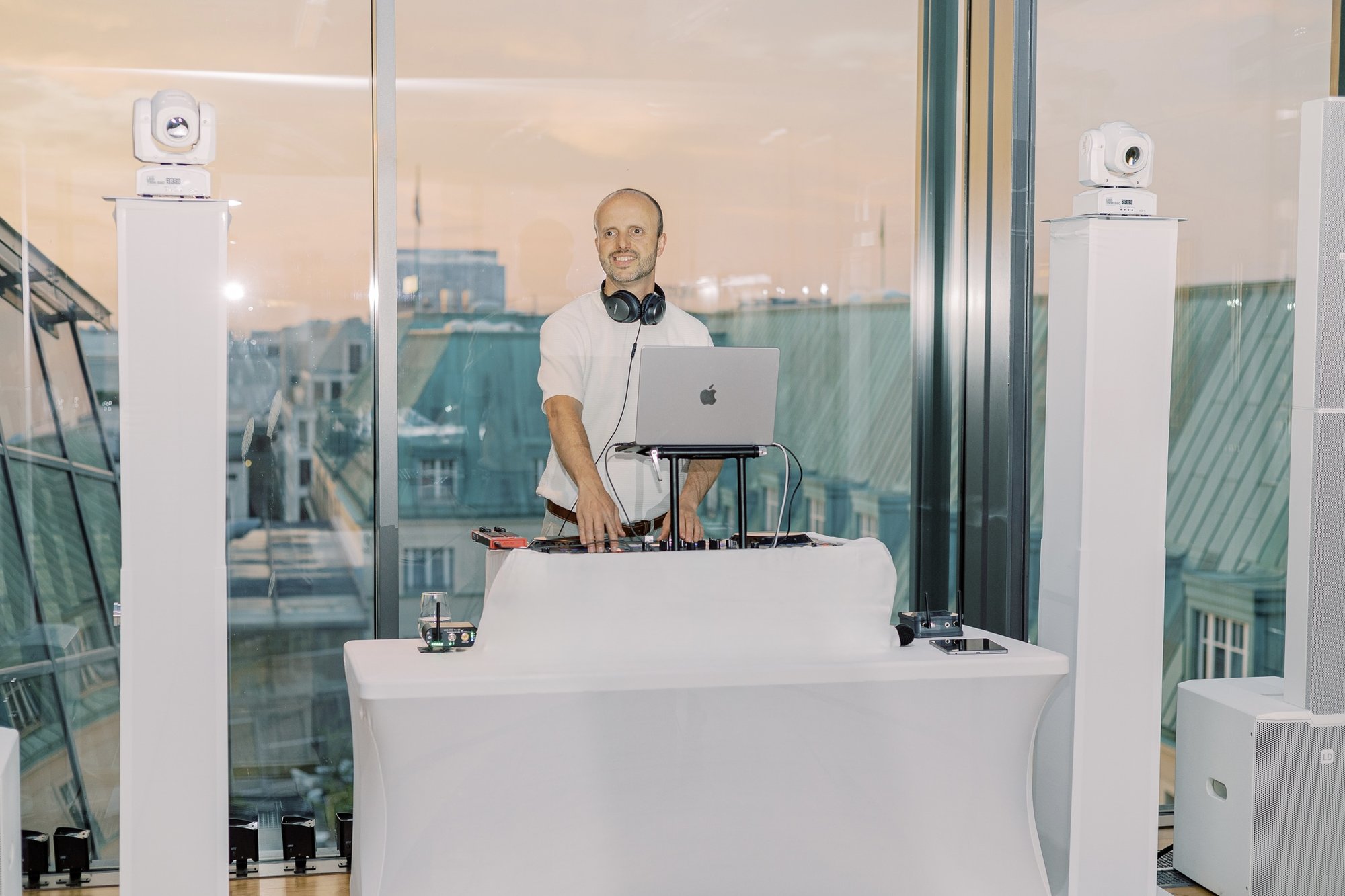
A good event playlist is not put together at a desk alone but in an exchange between you and your DJ: you bring your music requests, your guest list and your feeling for the occasion; the DJ brings experience, genre knowledge and a sense of what actually works on a dance floor. The result is a dependable musical framework that still leaves enough room to respond to your guests live.
Many hosts and organisers are unsure how much playlist planning actually makes sense. Is a rough direction enough, or should every song be fixed? The answer lies in between – and that is exactly what this article is about.
Why working with the DJ makes the difference
A playlist put together purely at home does not know your guests. It knows neither the mood in the room at 10 pm nor the reaction to the first up-tempo track. Your DJ, by contrast, brings exactly that experience: knowing which songs connect different age groups and tastes, how to shape transitions between genres, and when a break makes sense before the dance floor fills again.
That is why a preliminary conversation pays off, one in which you describe your wishes, the occasion and the make-up of your guests – whether it is a company party with colleagues and clients, a Christmas party, a birthday or a company anniversary. Out of that conversation a music concept develops that fits your event. How that planning best fits into the timing of your event is covered in our article on the event running order and timing.
How many music requests make sense?
A common question: how detailed should the event playlist be? In our experience, less is often more. An overloaded list of 150 tightly scheduled songs takes away exactly the flexibility a successful dance floor needs. A manageable selection of around 15 to 25 tracks that matter most to you and your guests, plus a rough direction on genre and mood, is far more useful.
That selection gives the DJ the orientation they need without forcing them into a rigid programme. They can place the songs at the right moments – at the start, during the meal, as the dance floor opener or later in the evening – and respond flexibly in between to whatever is happening in the room.
The must-play list
The must-play list holds the songs that should be played whatever happens – the hosts’ personal favourites, a company in-joke of a hit, or a track that fits a special moment in the evening. This list should be short and clearly prioritised, so the DJ knows which titles absolutely need a place in the set.
The no-go list
At least as important is the list of titles, artists or genres that should on no account be played. That can be a matter of taste or something quite practical – a genre that does not fit the corporate atmosphere, or a song that carries an unwelcome association. A clear no-go list saves misunderstandings and gives the DJ confidence in their choices.
Keeping a mixed audience in mind
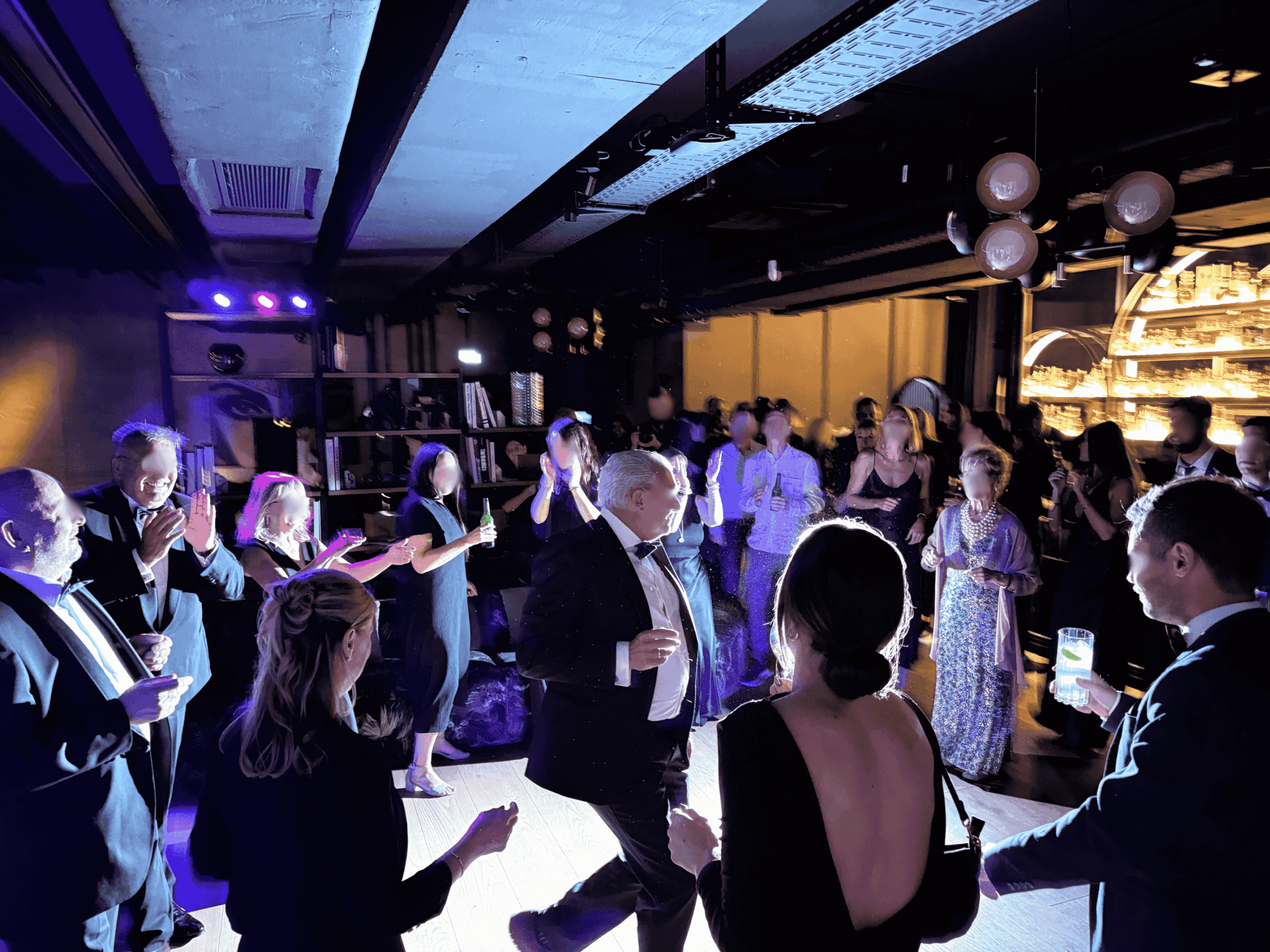
At company parties, galas or anniversaries, very different people often share the same room: colleagues from several generations, clients, business partners, perhaps family members too. A good event playlist takes that variety into account instead of serving only one group’s taste.
In practice that means: rather than committing to a single genre, it is worth mixing timeless classics, current chart music and genre highlights that appeal across generations. Your DJ can deploy that range deliberately – with quieter, conversation-friendly sets during the meal and a more dynamic programme once the dance floor opens. If you are wondering more fundamentally whether a live DJ or a pre-made playlist is the better choice for your event, you will find detailed background in our article DJ or playlist – what suits your event?.
Leaving the DJ room to move
As important as good preparation is, a playlist is a framework, not a fixed programme. The decisive advantage of an experienced event DJ over a plain playlist lies in exactly that: they read the crowd live. They sense when a song is not landing, recognise when the moment for the next lift in energy has come, and adjust the order as the night goes, instead of stubbornly working through a list.
That is why we recommend deliberately leaving the DJ room to move. Timing that is too tight – song X at exactly 9.15 pm, say – removes precisely the flexibility that keeps a dance floor full. It is more useful to communicate wishes, priorities and no-gos clearly and then trust the DJ to find the right moment for each track.
Handling spontaneous requests from guests
Spontaneous requests often come up during the event too – a colleague wants to hear their favourite song, a client asks for a particular classic. An experienced DJ handles such moments with ease: deciding in the moment whether and when a request can be worked in without interrupting the musical arc of the evening.
For that to run smoothly, it helps to clarify in the preliminary conversation how open you are to spontaneous requests – some hosts deliberately want to leave room for them, others prefer a programme that is as predictable as possible, with no surprises. Both are possible, as long as it is agreed in advance.
Formats for collecting music requests
Several practical formats have proved themselves for putting the event playlist together:
- A shared playlist on Spotify or Apple Music, which you and, where relevant, others involved (colleagues on the organising team) fill with requests over time.
- A short written list of must-plays and no-gos that you go through with the DJ in the preliminary conversation.
- A short questionnairethat we can give you to prepare, to capture genre preferences, special moments and the make-up of your guests in a structured way.
What matters is less the format than the quality of the conversation: a short, focused talk often achieves more than an endlessly long list with no priorities.
How many songs should I give my DJ in advance?
A manageable selection of around 15 to 25 must-play titles plus a rough genre direction is usually enough. That gives the DJ orientation without limiting them.
Can I also rule out individual songs or genres completely?
Yes – a clear no-go list is both usual and sensible. It helps the DJ respect your musical limits from the outset.
What happens if guests make spontaneous requests during the party?
An experienced DJ handles them flexibly and decides in the moment whether and when a request fits in without interrupting the mood. How open you want to be to that is best clarified in advance.
Do I have to put together a complete playlist myself as the organiser?
No. It is enough to name your wishes, priorities and no-gos – your DJ takes care of the rest based on experience and adapts the programme live to your guests.
In summary: planned together, delivered live
The best event playlist is the result of genuine collaboration: you set the direction, the highlights and the red lines; your DJ translates that into a coherent, living musical programme and responds live to your guests as the evening goes on. That combines planning certainty with the flexibility a really good dance floor needs.
Are you planning a company party, a company anniversary or another event and would like to work out the music together with an experienced DJ team? Take a look at our packages and prices or contact us with no obligation – we will gladly discuss your event playlist and how best to bring it to life.