Running order & timing for your event – from reception to after-show
A successful event lives not only on good music, but on the right music at the right moment. A well-considered event running order makes sure reception, dinner, speeches and party flow into one another seamlessly – and that your guests dance exactly when the mood is ready for it. In this article we show you how a timeline is built from a musical point of view and what matters when it comes to volume, genre and transitions.
Why timing decides the mood
Many organisers underestimate how strongly the music sets the rhythm of an evening. If the music is too loud during the reception, the first conversations between guests become harder. If the dance floor opens too early, the energy dissipates before the real peak arrives. A good running order therefore does not think in individual programme items but in one continuous curve: it starts calmly, builds tension, reaches a peak and winds down deliberately. As your DJ team we steer exactly that curve – coordinated with your venue, your host or your event agency.
The typical timeline of an event
Every event is individual, yet most company parties, galas and larger birthday celebrations follow a similar dramaturgy. The phases below serve as orientation – the exact length always depends on guest numbers, occasion and venue.
Reception: arriving and settling in
The reception is the calling card of the evening. What counts here is background music that carries conversation rather than drowning it: discreet lounge sounds, soft jazz or instrumental versions of familiar songs. The volume is deliberately low, so that guests who may be meeting for the first time can talk. Depending on the programme, this phase lasts 30 to 60 minutes and is often the first impression your guests take from the whole evening.
Dinner underscoring: present, but restrained
During the meal you need music that creates atmosphere without being intrusive. Here we usually choose warm, harmonious colours – from soul through chilled pop to instrumental arrangements, matched to the audience and the character of your event. What matters is that the volume stays constant across the whole dinner and grows with the noise level in the room without becoming disruptive. For multi-course menus we also build in small dynamic variations, so the underscoring does not feel monotonous.
Speeches and programme items: directing the detail
Honours, words of thanks, award presentations or company presentations are the part of the evening that needs the most precise coordination. Here we work closely with the host, the technical crew and, where relevant, the event agency, so that the transitions between music and spoken contributions sit cleanly. A short musical opening can announce a speech; a fitting close rounds it off. At corporate events with several programme items in particular, a written running order with time slots is advisable, which we agree with you or your production team in advance – buffer times included, in case an item slips.
Transition to the party: building the curve
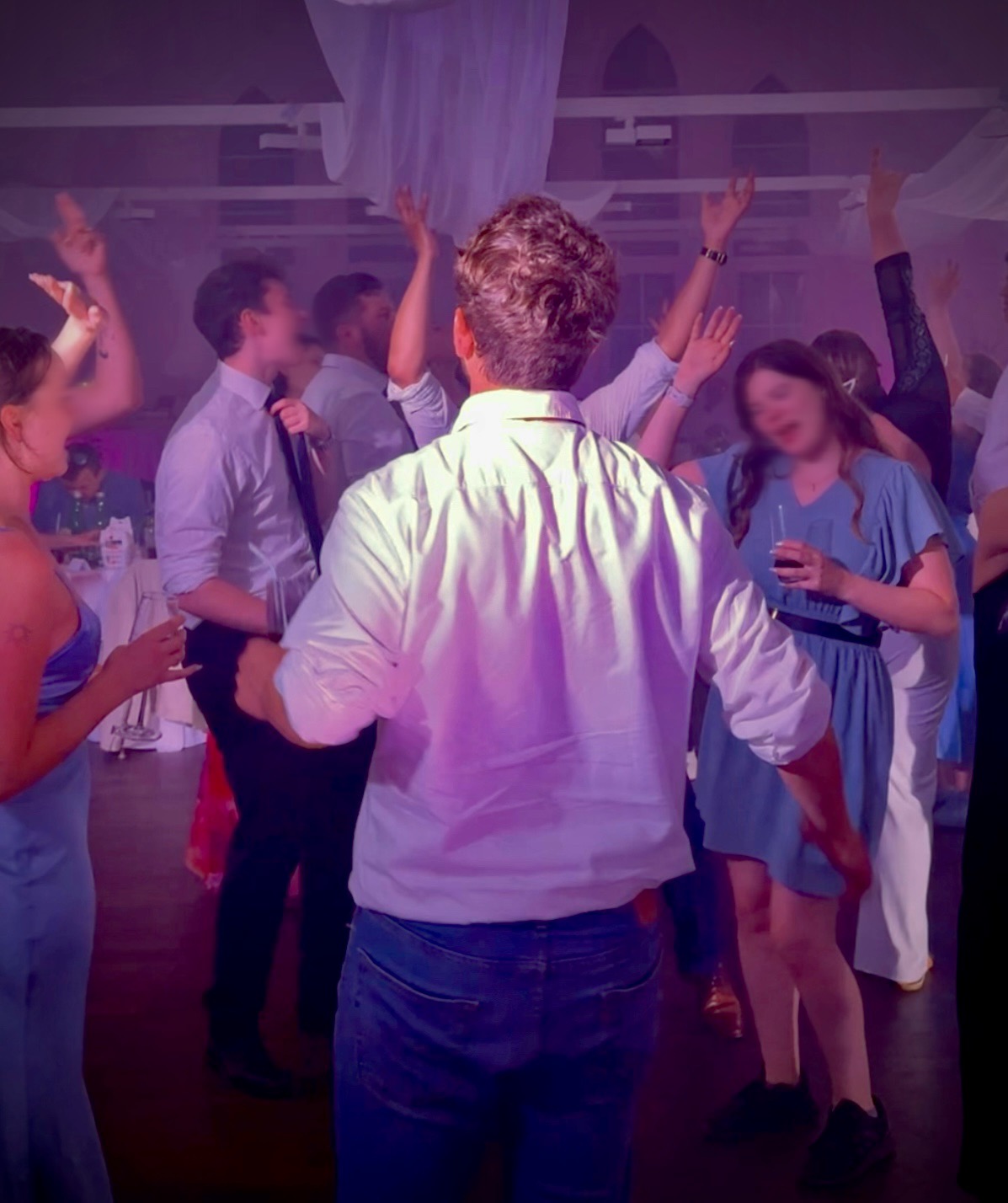
The switch from the official part to the dance floor is one of the most sensitive moments in the whole evening. If the music jumps too abruptly from quiet background sound to driving beats, it feels wrong. Instead we build the energy step by step: first familiar tracks with high recognition value, then rising tempos and volumes until the dance floor fills organically. This transition phase usually lasts 15 to 30 minutes and often decides how full the dance floor gets later.
Peak: the high point of the evening
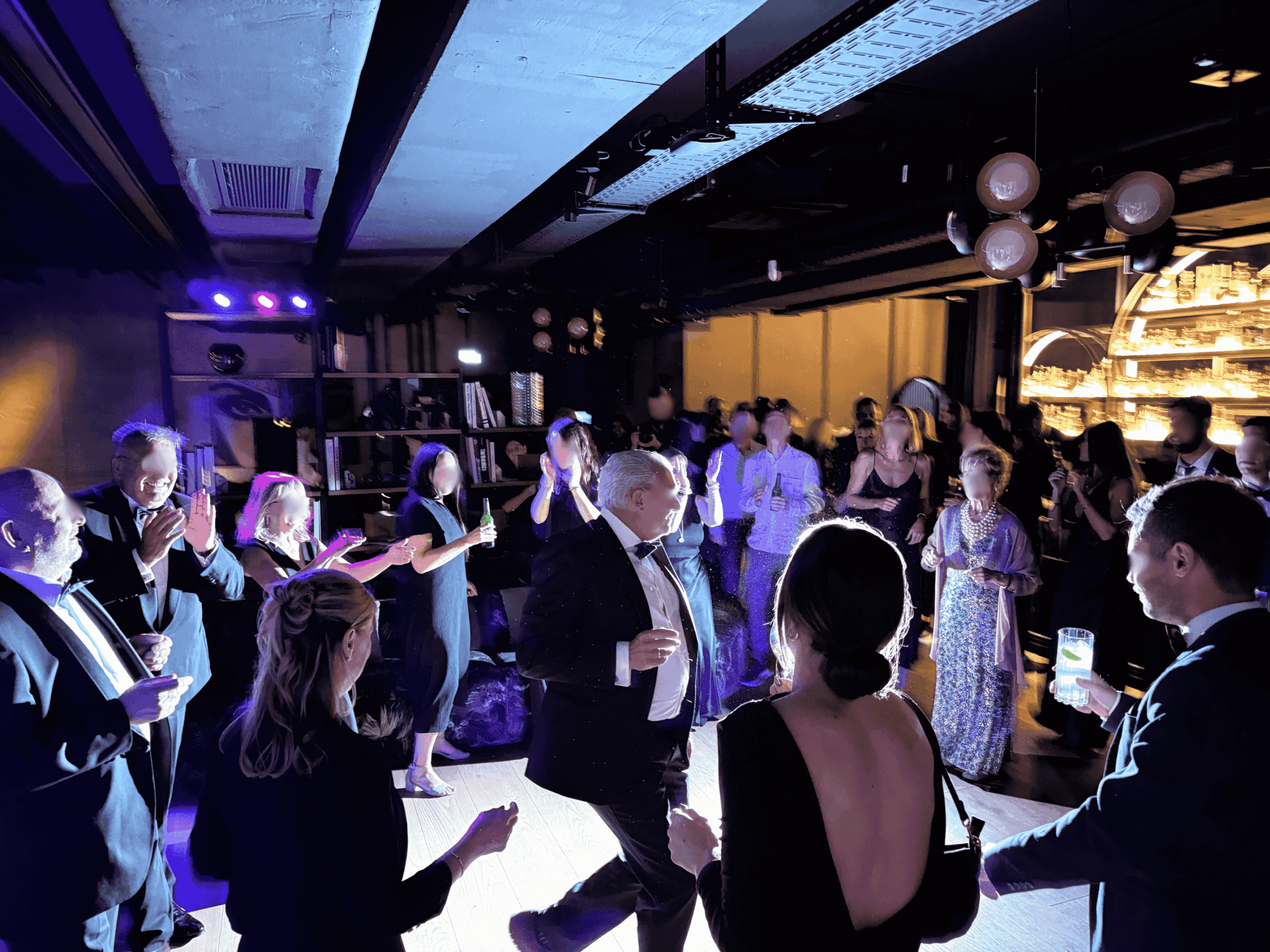
In the main phase of the party we steer the genre mix and energy level live, according to how your guests respond. Rather than playing a rigid playlist, we read the dance floor and react to the crowd, the age mix and the mood in the room. With mixed groups of guests in particular – company parties with several generations in the team, for instance – this feel is decisive in not losing anyone while still keeping the floor full. More on how to structure your music requests in advance can be found in our article on the event playlist.
Winding down: easing off rather than stopping abruptly
The end of an evening deserves timing too. Instead of stopping the music suddenly, we reduce tempo and volume step by step over the last 20 to 30 minutes. That signals unobtrusively to guests that the evening is drawing to a close and provides a rounded finish instead of a hard cut. At events with an after-show area or an extended celebration, this transition can also be shaped as a second, smaller build in energy.
Planning time slots realistically
A common mistake in running orders: transitions calculated too tightly. Speeches often run longer than planned, buffets take more time, photos delay the next item. We recommend deliberately planning buffer times of 10 to 15 minutes between the phases and treating the running order as a living document that is adapted flexibly on the day. This is exactly where an experienced DJ team shows its value: we respond live to changes without the dramaturgy of the evening suffering.
Working with hosts, programme and production
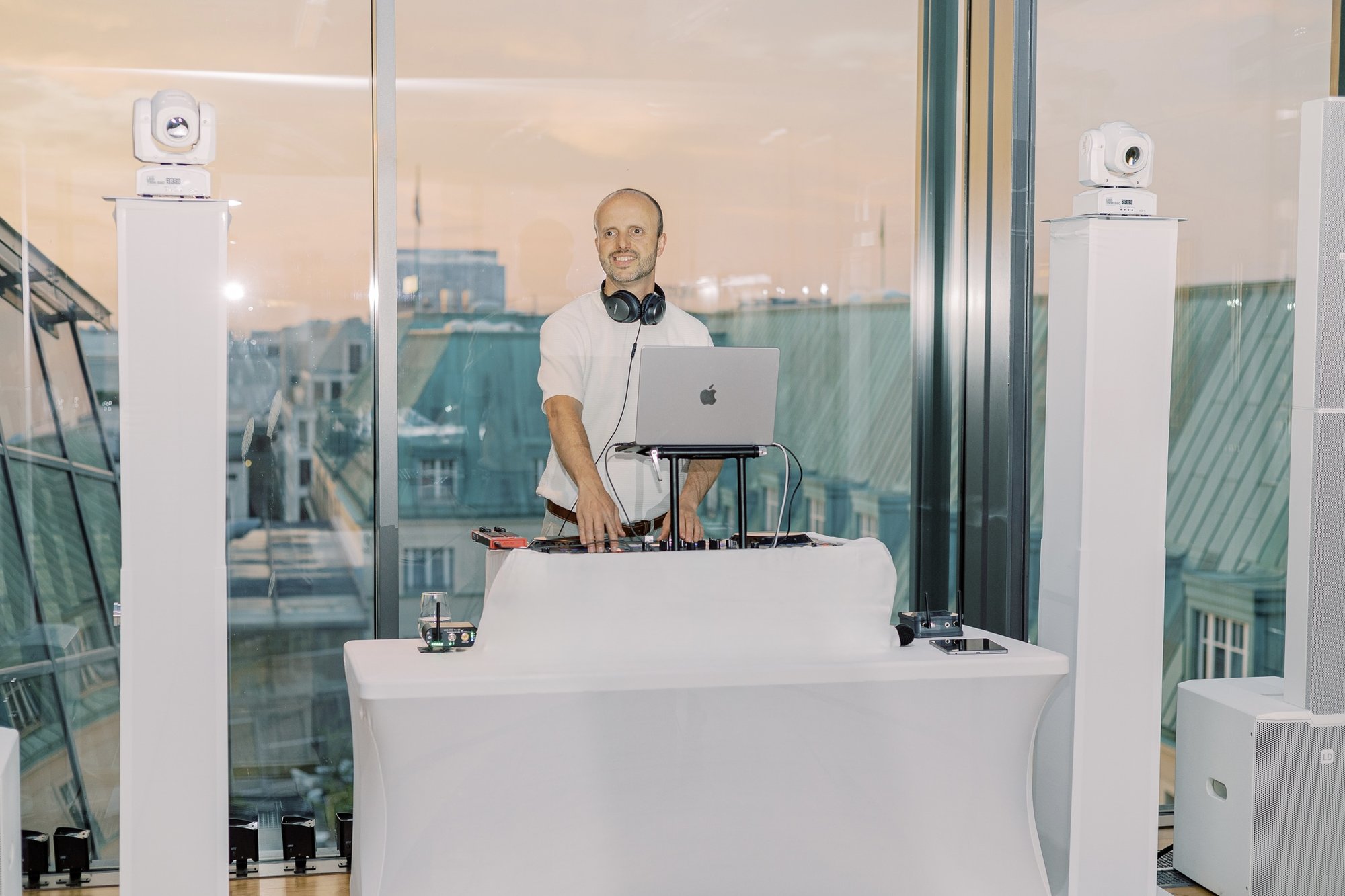
At larger corporate events, galas or company occasions with an external event agency, the music is only one building block among many. We therefore coordinate in advance with hosts, technical teams and the event production, so that handovers – from stage hosting back to the music, for example – work smoothly. What that cooperation looks like in practice at larger corporate formats is explained on our page about corporate events and galas.
How long before the event should the running order be settled?
Ideally we discuss the rough timeline four to six weeks before the date and refine the details, such as exact times and programme items, in the final one to two weeks.
Who creates the running order – we or the DJ?
As a rule we work on it together: you or your event agency supply the programme items, and we translate them into a musical dramaturgy with suitable transitions and time slots.
What happens if the running order changes at short notice?
Things slipping is part of event life. Because we think along live on site, we adapt music and timing flexibly – without the mood suffering.
Does every event need such a detailed plan?
Not necessarily. For smaller celebrations a rough framework with the key points is often enough. For larger corporate events or galas with several programme items, a detailed plan clearly pays off.
How to prepare your running order
For a coherent evening it helps to settle a few key points early: the planned times for reception, dinner, programme and the start of the party, fixed items such as speeches or honours, and any particular wishes on musical style or volume. From those details we develop a musical road map together with you, one that adapts flexibly to how the evening actually unfolds. Over the coming weeks we are also preparing a free template with which you can structure your own running order – do check back soon, or just ask us directly.
Are you planning an event and would like reception, programme and party coordinated musically from a single source? Take a look at our packages and prices or get in touch with us with no obligation – together we will develop the right running order for your occasion.